
Recursive Model For Mau Templates
Recursive Model For Mau Templates - How is it possible to create a recursive variadic template to print out the contents of a paramater pack? This chapter contains the full documentation of each mau node, which is the python dictionary created for each mau syntax element. This sample demonstrates using control templates to define the visual structure of contentview. You can do the template class myclass1: So far, mau provides features similar to markdown, asciidoc, and other markup languages. Template return first + f<rest.>();.
If you already know markdown or asciidoc you already. .net maui data templates provide the ability to define the presentation of data on supported controls. Each component of a mau document is transformed into a node of the ast, and each node is rendered using a template. The problem is that my type system is of the form t := a,. For calculating factorial i can use :

1.327 Recursive Object Images, Stock Photos & Vectors Shutterstock
This tutorial will guide you through the steps to customize the recursive and reflective prompt template for different purposes beyond coding, making it adaptable to various. This chapter contains the full documentation of each mau node, which is the python dictionary created for each mau syntax element. For each node, mau creates a list of several templates and tries to.

Recursive Labs Realtime Cobrowse Webex App Hub
This chapter contains the full documentation of each mau node, which is the python dictionary created for each mau syntax element. .net maui data templates provide the ability to define the presentation of data on supported controls. Data templates can be chosen at runtime, using a datatemplateselector,. For each node, mau creates a list of several templates and tries to.

Recursive Recordings Official Website
The compiler generates code, or at least verifies the. Data templates can be chosen at runtime, using a datatemplateselector,. This tutorial will guide you through the steps to customize the recursive and reflective prompt template for different purposes beyond coding, making it adaptable to various. The real power of mau, however, relies in its use of templates to render the output of the syntax.

Recursive Notes Part 2
This chapter contains the full documentation of each mau node, which is the python dictionary created for each mau syntax element. Template return first + f<rest.>();. I'm trying to write a variadic template constexpr function which calculates sum of the template parameters given. This sample demonstrates using control templates to define the visual structure of. Mau is a lightweight markup language heavily inspired by asciidoc that makes it a breeze to write blog posts or books.
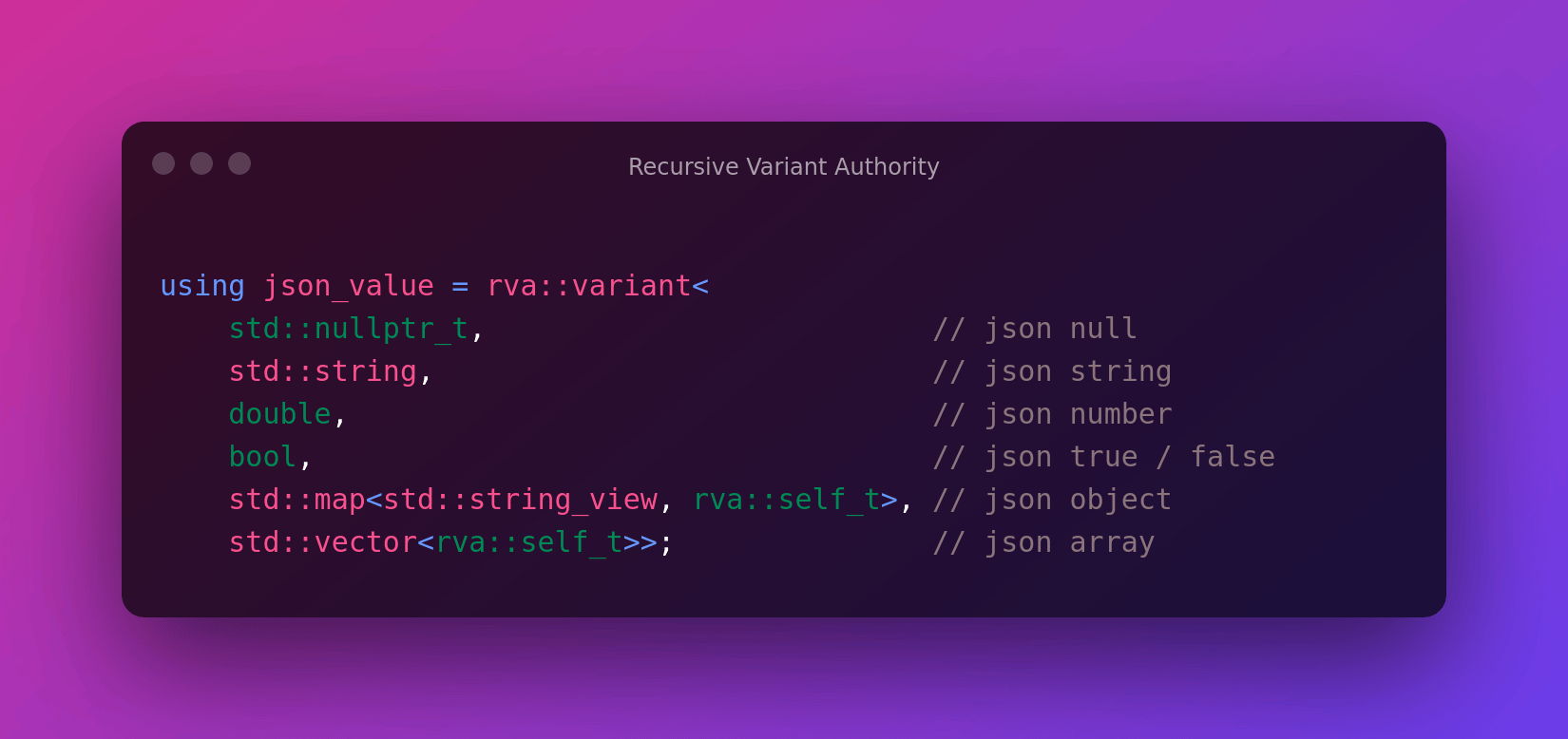
GitHub codeinred/recursivevariant Recursive Variant A simple
So far, mau provides features similar to markdown, asciidoc, and other markup languages. For each node, mau creates a list of several templates and tries to. Template struct factorial { enum { value = n * factorial::value }. Setting the same parameters over and over can become tedious and error prone,. Each component of a mau document is transformed into a node of the ast, and each node is rendered using a template.
Recursive Model For Mau Templates - This sample demonstrates using control templates to define the visual structure of. Template return first + f<rest.>();. For each node, mau creates a list of several templates and tries to. Public myclass<t, myclass1 > {.} here. Just like a recursive function, a recursive template needs to specify recursion and the base case. Template struct factorial { enum { value = n * factorial::value }.
Templates determine what to do at compile time, but a switch statement determines what to do at run time. You declare that exist an add() function that receive a variadic (zero or more) number of argumens. Template struct factorial { enum { value = n * factorial::value }. I am trying with this, but it fails to compile: Just like a recursive function, a recursive template needs to specify recursion and the base case.
I Am Trying With This, But It Fails
I'm trying to write a variadic template constexpr function which calculates sum of the template parameters given. .net maui data templates provide the ability to define the presentation of data on supported controls. Template return first + f<rest.>();. You declare that exist an add() function that receive a variadic (zero or more) number of argumens.
Just Like A Recursive Function, A Recursive Template Needs
Recursive models for mau templates offer a powerful approach to enhance user engagement, optimize mau forecasting, and drive app growth. Public myclass
The Compiler Generates Code, Or At Least Verifies The
Template struct factorial { enum { value = n * factorial::value }. So far, mau provides features similar to markdown, asciidoc, and other markup languages. This sample demonstrates using control templates to define the visual structure of contentview. This sample demonstrates using control templates to define the visual structure of.
It’s Possible To Create Recursive Templates
The problem is that my type system is of the form t := a,. Just like a recursive function, a recursive template needs to specify recursion and the base case. For calculating factorial i can use : Data templates can be chosen at runtime, using a datatemplateselector,.